Technical Articles
How to Spec Honeycomb Panels for Furniture and Appliance Export
Technical specification guide for honeycomb panels used in furniture and appliance export: panel build, compression, fit, humidity, tests, and RFQ fields.
Quick answer
Specify export honeycomb panels by the load path and fit, then define core, liners, panel thickness, edge treatment, conditioning, and full-pack tests. A panel that supports a static lab load can still fail under appliance vibration, furniture corner impact, or humid ocean transit.
Define the panel role
State whether the panel is a top pad, base pad, side spacer, corner protector, shelf, or load-distribution deck. Mark contact faces, prohibited abrasion zones, and where straps or pallet forces act. The same material can need different build-ups when it carries a point load versus fills a gap.
Write the panel construction
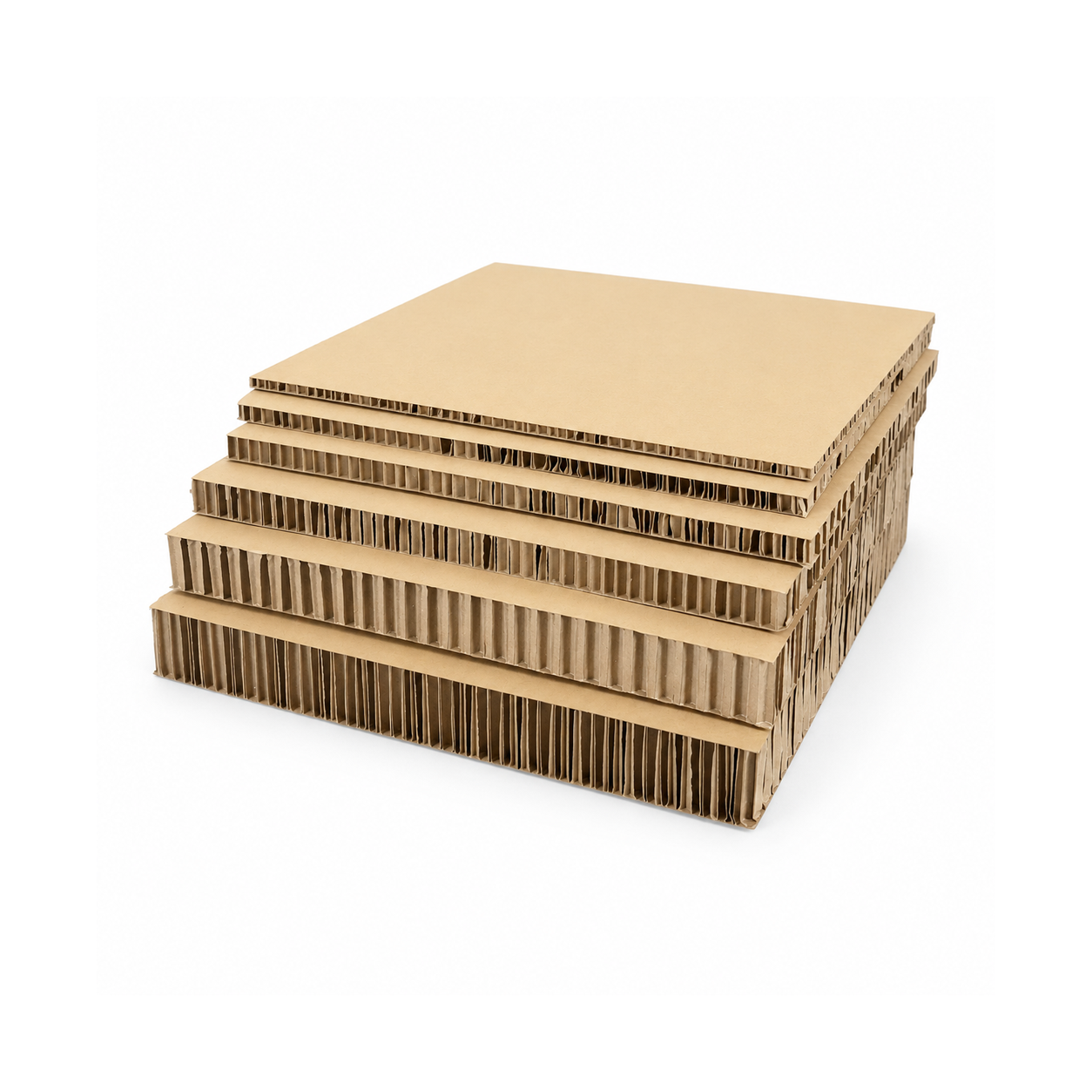
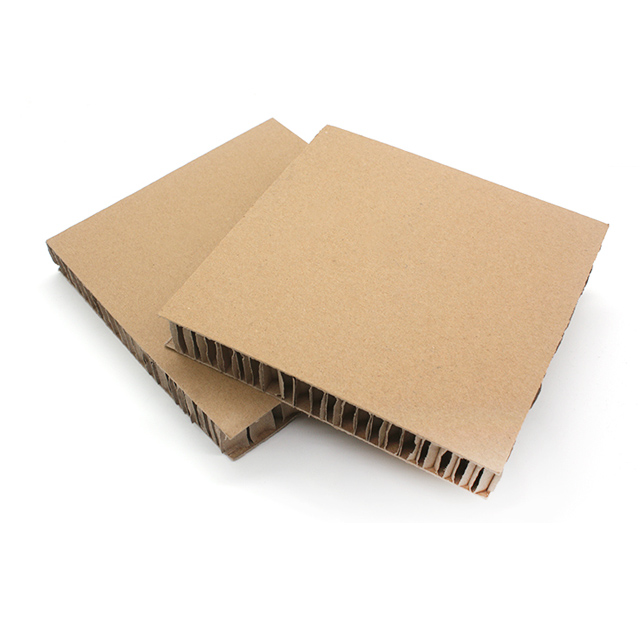
Specify finished L×W×T tolerances, core cell size and height, core paper, liner grades/GSM, adhesive system, and any face paper or coating. Include grain or machine-direction requirements where bending behavior matters. Do not leave panel thickness as “approximately” when it controls appliance clearance.
Design for real loads
Provide product mass, contact footprint, stack height, pallet pattern, and expected acceleration or handling events. Request compression performance under defined orientation and conditioning. Point loads from feet, brackets, or appliance corners may require pads, denser cores, or a distributing face sheet.
Control moisture and flatness
Humidity can soften paper, alter adhesive bonds, and bow panels. Set moisture and flatness limits after conditioning, especially for wide furniture faces. If panels contact finished surfaces, evaluate dust, loose fibers, and abrasion after vibration rather than relying on visual inspection alone.
Verify converting details
State cut tolerances, slots, folds, perforations, edge wrap, tape, and glue points. Die-cut bridges and narrow tabs are common weak points. Test whether panels nest and load into cartons without damaging the panel or forcing operators to bend it.
Test the complete export pack
Run compression, vibration, and drop or handling trials on the appliance or furniture pack with its carton, pallet, wrap, and container restraints. Sample panels alone cannot prove system performance. Retain production-intent specimens and document conditioning.
RFQ fields
Panel role, drawing, contact map, and product/pallet load data
Finished size/tolerance; core, liner, adhesive, and face construction
Compression/flatness/moisture/abrasion targets and test conditions
Die-cut details, packing density, container-load plan, and climate
Prototype and production sample gates; annual volume; Incoterms
Related PackTrades Knowledge
Buyer Checklist
Related Products
Supplier SKUs on PackTrades that match this topic—open a product, then submit an RFQ.
Continue on PackTrades
Open the matching product categories, solutions, and RFQ path for this topic.