Buying Guide
Honeycomb Paper Buying Guide
How to buy honeycomb paper and paperboard panels: cell size, thickness, facing, compression trials, market use cases, RFQ fields, and China supplier checks.
Quick answer
How to buy honeycomb paper and paperboard panels: cell size, thickness, facing, compression trials, market use cases, RFQ fields, and China supplier checks.
Buy the load case, not a catalog thickness
Honeycomb paper fails as a commodity SKU when buyers order “20 mm board” without cell size, facing grade, compression target, or end use. The right honeycomb is the lightest construction that survives your stacking, strapping, vibration, and humidity with an agreed margin. This guide gives a decision sequence and RFQ fields you can send to Chinese honeycomb manufacturers and protective-packaging converters.
What you are actually buying
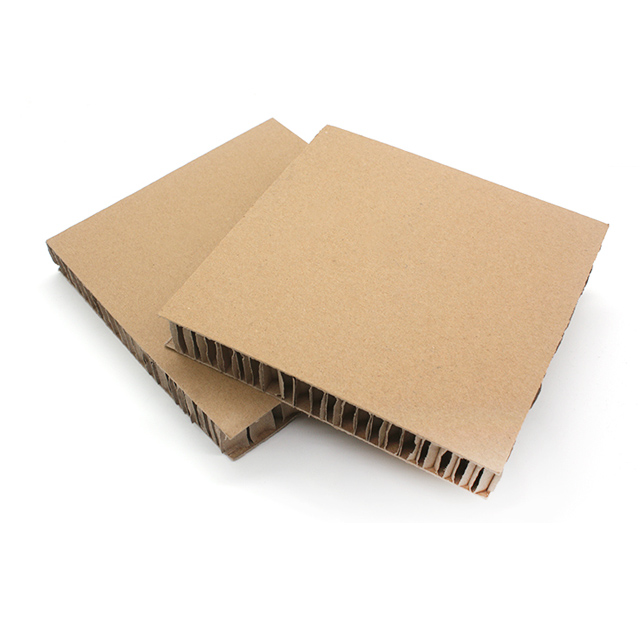
Most “honeycomb paper” programs include core (expanded hexagonal cells), facing sheets (kraft, test liner, or specialty papers), and adhesive bonds between layers. Finished forms include flat panels, cut pads, blocks, pallet top boards, door protectors, and CNC-shaped parts. Clarify whether you need raw board for your own cutting or finished cut-to-size parts with tolerances.
Step 1 — Define the duty
Product weight and contact area; whether the honeycomb is a top board, interleaf, edge block, or full panel crate wall; max stack height; strapping tension; warehouse climate and ocean freight exposure; surface-sensitivity (painted furniture, glass, appliances); recyclability or wood-free requirements; target dimensions and cutting accuracy.
Step 2 — Choose cell size and core thickness together
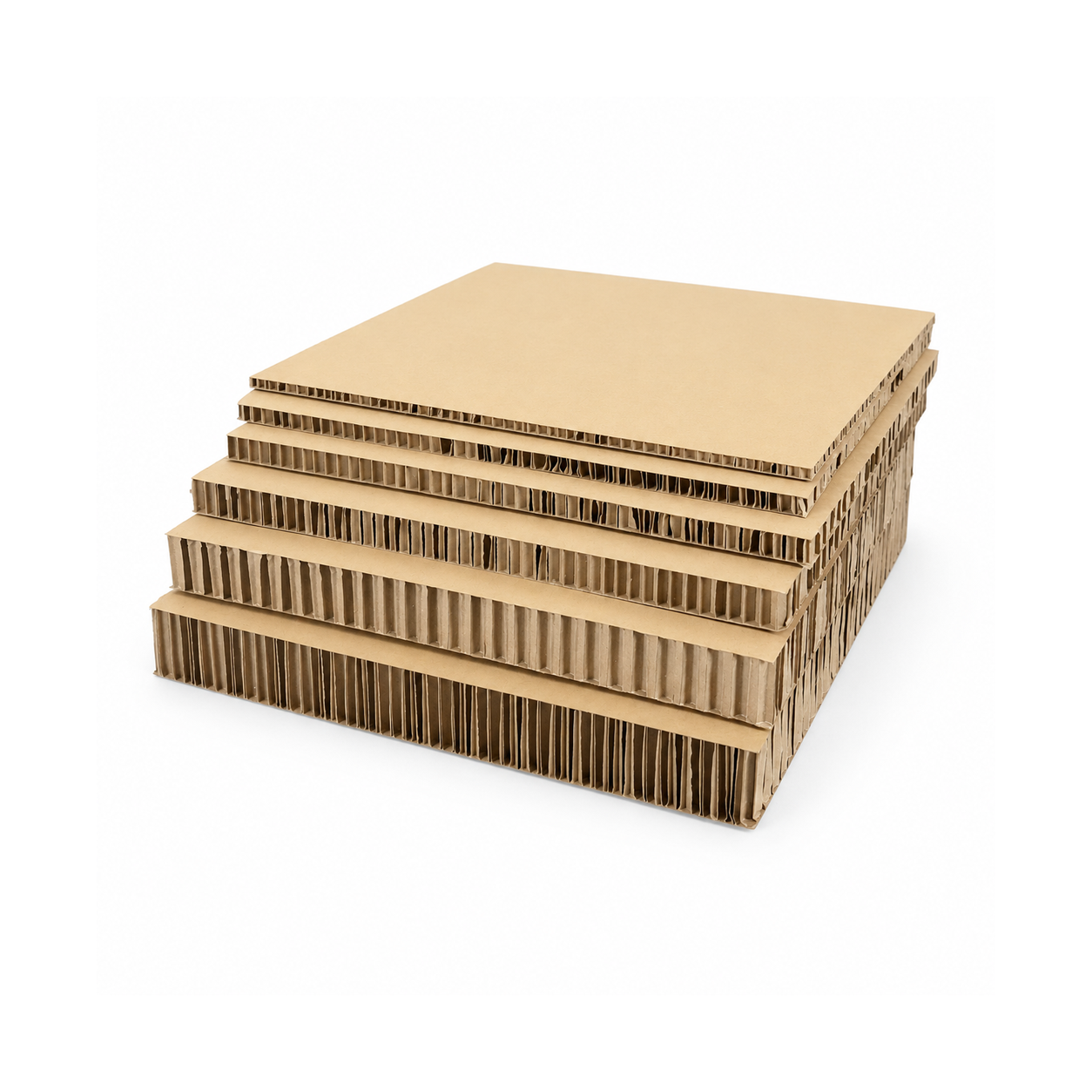
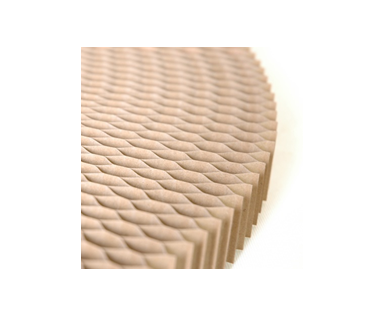
Smaller cells (often around 6–8 mm) tend to feel denser and can improve local crush resistance and smoother facing support; larger cells (often 10 mm+) reduce weight and material use but may show more “print-through” or local denting under point loads. Thickness (commonly 10–50 mm+, application-dependent) sets column height of the cells. Never change one without re-checking compression on the real contact area.
Step 3 — Specify facing and adhesive
Facing grammage and furnish affect puncture, surface friction, printability (if any), and moisture behavior. Water-based adhesives suited to honeycomb lines matter for bond integrity—generic “paper glue” claims are not enough. If you need recyclable mono-material claims, require paper-compatible adhesive documentation and avoid undocumented coatings that break recycling streams.
Step 4 — Set a compression gate and trial plan
Put a minimum compression strength (method, units, conditioning, panel size) on the RFQ. Validate critical SKUs with filled product trials: stack, strap, forklift handling, and humidity soak if sea freight is involved. Lab compression on dry panels alone is not enough for tropical lanes.
Common applications and typical construction notes
Furniture/appliance pads: moderate thickness, clean facing, tight cut tolerances. Pallet top boards / load spreaders: higher compression, often larger formats, consistent flatness. Industrial blocks: thicker cores, sometimes multi-layer builds. Door and panel separators: scratch-safe facing and controlled thickness. Match construction to abuse level—not to a single plant standard thickness for every SKU.
Quote comparison matrix
Price per m² or per piece; cell size + thickness + facing; compression evidence; MOQ and lead time; cutting/CNC capability; adhesive type; packaging of panels for export; payment terms; defect allowance; whether supplier may substitute cell size. Normalize quotes to the same construction before ranking price.
Sampling that prevents first-order rework
Approve a structural sample at production cell size and facing—not a prettier prototype. Measure thickness, flatness, bond integrity (edge peel feel plus any contracted lab test), and cut tolerance. Run one pilot shipment when damage risk is high. Sign a sample sheet with photos and material IDs; ban verbal changes after approval.
China sourcing realities
Capable plants will ask about load case, cell size, and adhesive before quoting. Weak vendors quote only thickness and disappear when panels warp or delaminate after humidity. Ask for line photos, typical cell sizes in production, export packing method, and references in furniture, appliances, or industrial goods if those are your segments.
RFQ field list
Finished dimensions and tolerance; cell size; core thickness; facing grade/grammage; compression min + method; adhesive requirements; quantity ladder; destination climate; cutting method; palletization of panels; inspection rules; substitution policy.
Related PackTrades Knowledge
- Honeycomb Paper vs Corrugated Board
- Honeycomb Paper vs Foam Packaging
- Edge Board Buying Guide
- Industrial Protective Packaging Overview
- then force comparable RFQs using the fields above
Buyer Checklist
Related Products
Supplier SKUs on PackTrades that match this topic—open a product, then submit an RFQ.
Continue on PackTrades
Open the matching product categories, solutions, and RFQ path for this topic.