Buying Guide
Edge Board Specs for Furniture and Appliance Export
Buyer guide to edge-board specifications for furniture and appliance export: profile, leg length, thickness, compression, moisture, strap protection, and container-load validation.
Quick answer
For furniture and appliances, specify edge board by its job: corner impact protection, strap load spreading, stack reinforcement, or surface separation. A generic “paper corner protector” quote leaves critical leg length, thickness, and compression performance undefined.
Map the vulnerable edges
Mark exposed cabinet corners, appliance top edges, door seams, and strap contact points on a pack-out drawing. Long furniture edges need continuous coverage; a short corner piece may protect only a local impact point.
Choose the profile
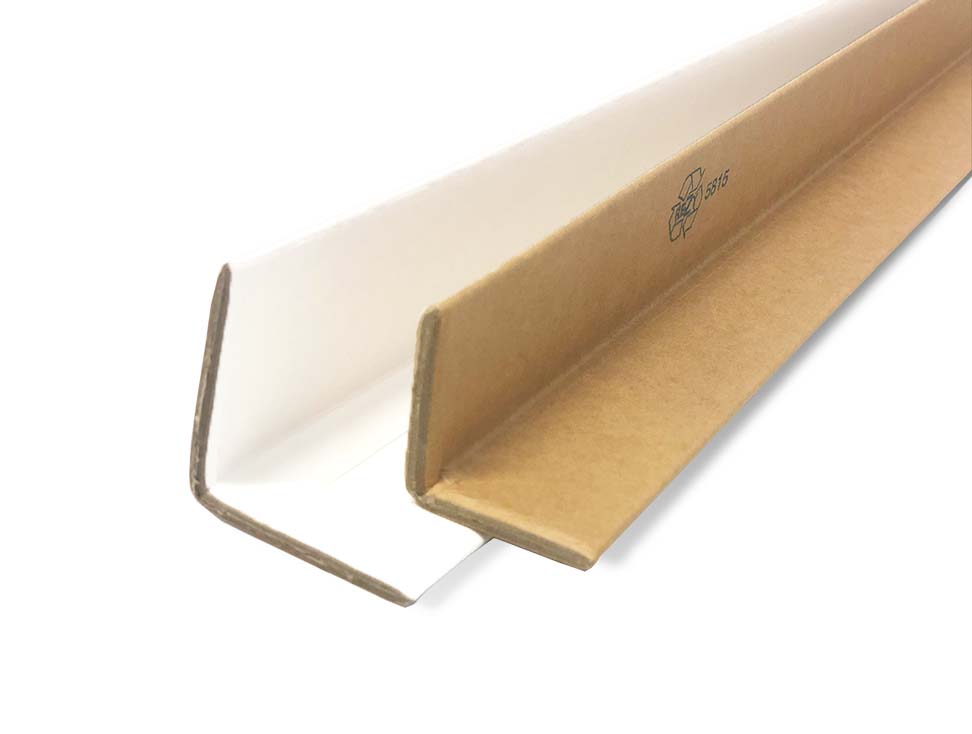
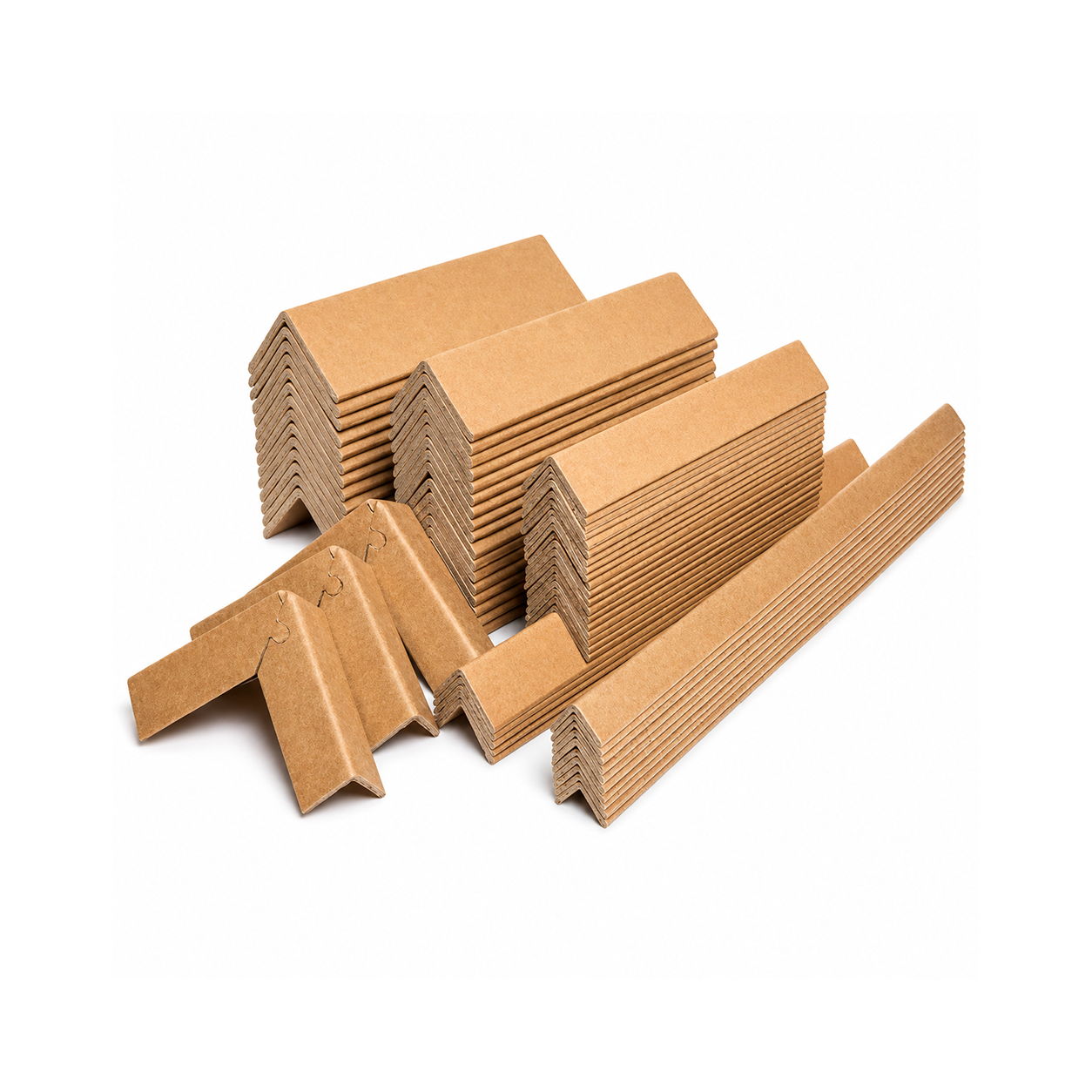
L-shaped edge board protects outside corners. U-channel or wrap-around profiles can retain panels and protect multiple faces. Flat edge strips spread strap pressure but do not protect a protruding corner in the same way.
Set dimensions precisely
State leg lengths, wall thickness, cut length, inside radius, and tolerances. The legs must extend beyond the strap contact area; boards that are too narrow can let straps damage veneer, paint, or retail cartons.
Match strength to the load
For stack reinforcement, request compression or edge-crush data under the relevant orientation. For strapping, validate board stiffness and strap indentation on the actual load instead of relying on thickness alone.
Account for the route
Sea containers introduce humidity, vibration, and load shift. Specify moisture expectations and use a load plan with dunnage, stretch wrap, and appropriate straps; edge board is one component, not a restraint system.
Control surface contact
Printed or high-gloss furniture may need clean-facing paper, a non-marking layer, or a separator. Test board dust, glue squeeze-out, and rub marks after a realistic transit simulation.
RFQ
Profile; leg lengths; thickness; cut length; tolerances
Product/pack drawing; strap width and tension
Compression or indentation target; facing material
Container route; pack-out and trial-load requirement
Related PackTrades Knowledge
Buyer Checklist
Related Products
Supplier SKUs on PackTrades that match this topic—open a product, then submit an RFQ.
Continue on PackTrades
Open the matching product categories, solutions, and RFQ path for this topic.