Buying Guide
Dunnage Air Bags Buying Guide
Buyer guide to dunnage air bags for container and truck load void fill: types, paper vs poly, sizes, inflation, safety limits, and RFQ specs for export packaging from China.
Quick answer
Dunnage air bags fill voids in containers and trailers so cargo cannot shift. Buy them by working pressure class, size for the void, paper or poly construction, and a load plan—not by picking the largest bag in a catalog photo. Overinflation and wrong bag class cause burst failures and cargo claims.
What they do in export packaging
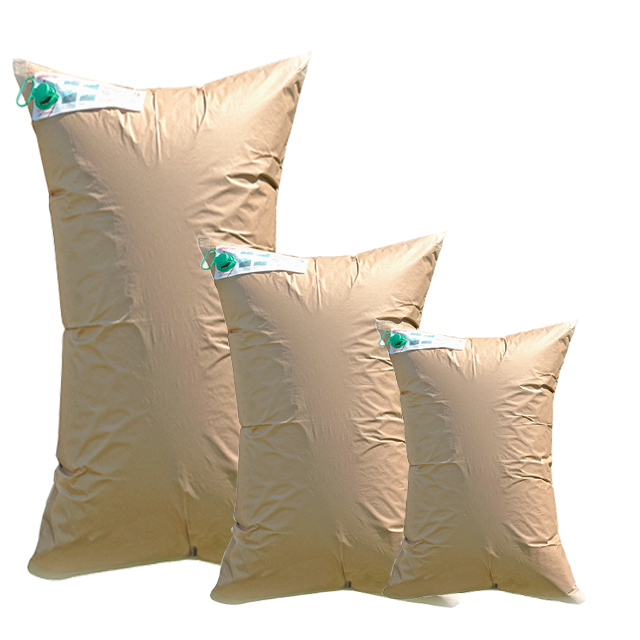
Air bags brace gaps between pallet rows or between cargo and container walls. They complement edge boards, slip sheets, and strapping; they do not replace proper weight distribution or banned-cargo rules. Use them when voids are predictable and bags can be placed without sharp puncture risks.
Paper vs poly constructions
Paper dunnage bags are common for many dry-cargo container programs and are often preferred in sustainability-led load plans. Poly bags may suit wetter or harsher conditions depending on specification. Ask for ply count, bladder design, valve type, and rated operating/peak pressure. Match the bag class to transport mode (road, rail, ocean).
Sizing the void
Measure gap length/width/height and cargo faces. Bags that are too small leave movement; bags that are too large wrinkle and abrade. Suppliers should help translate void dimensions into bag size charts. Photograph load plans for repeat lanes so packing teams install consistently.
Inflation and safety limits
Train crews on target pressure and maximum pressure. Use the correct inflator with a gauge. Hot containers can raise internal pressure—follow supplier guidance for temperature. Never use damaged valves or punctured faces. Keep sharp banding edges and nail points away from bag surfaces.
System thinking with other materials
Pair air bags with edge protection where straps contact cartons, and with anti-slip sheets when pallets slide. Honeycomb panels or bulkheads may be better for some full-face bracing needs. See industrial protective and edge board guides when building a full export kit.
RFQ fields
Transport mode and void dimensions
Bag type/class and material (paper/poly)
Working and peak pressure ratings
Valve type; inflator needs; quantity per container
Humidity/temperature notes; destination
Annual volume; sample for fit trials; Incoterms
Common buyer mistakes
Buying only on unit price; skipping pressure class; letting untrained teams free-inflate; using bags against sharp machinery; and ignoring humidity that weakens paper plies. Validate on one lane before global rollout.
Related PackTrades Knowledge
Buyer Checklist
Related Products
Supplier SKUs on PackTrades that match this topic—open a product, then submit an RFQ.
Continue on PackTrades
Open the matching product categories, solutions, and RFQ path for this topic.