Buying Guide
Edge Board Buying Guide
Buyer guide for paper edge boards and corner protectors: leg widths (35/50/70 mm), thickness, paper grade, strapping trials, RFQ fields, and China sourcing checks.
Quick answer
Buyer guide for paper edge boards and corner protectors: leg widths (35/50/70 mm), thickness, paper grade, strapping trials, RFQ fields, and China sourcing checks.
Low-cost insurance against strap and corner crush
Edge boards—also called angle boards, corner boards, or L-boards—protect carton corners, panel edges, and product perimeters from strapping damage, pallet impact, and compression during stacking. They are inexpensive relative to claim cost, yet often specified late with vague “send some corners” language. This guide shows how to specify leg width, thickness, paper, and trials so China quotes are comparable and packs survive export handling.
What edge boards are and are not
Most paper edge boards are laminated kraft or recycled paper plies formed into an L (or U) profile. They add localized beam strength at corners and distribute strap pressure. They do not replace a correctly specified corrugated carton or honeycomb top board. Treat them as a system component: board + strap + pallet pattern + product weight.
Common profiles
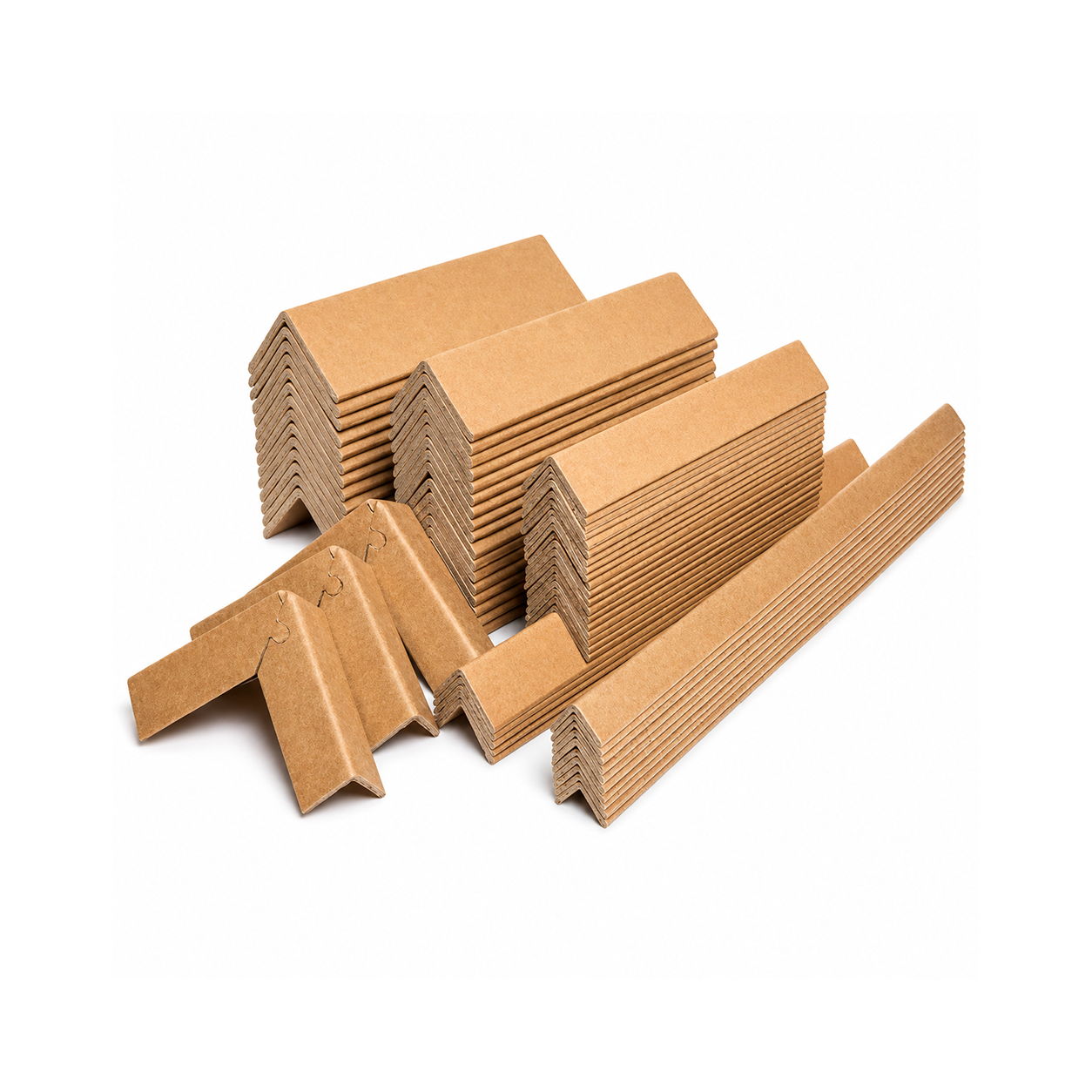
L-shaped angle boards for carton and load corners; U-channel profiles for panel or sheet edges; heavy-duty multi-ply boards for steel, glass, or stone; custom-cut lengths matched to pallet height or product height. Confirm whether you need equal-leg L profiles or unequal legs for asymmetric packs.
Leg width guidance (start here, then trial)
Typical leg widths in export programs are about 35 mm, 50 mm, and 70 mm (custom sizes exist). Use 35 mm for lighter cartons, retail shippers, and moderate strap tension where space is tight. Use 50 mm as a common general-purpose choice for mixed export cartons and furniture packs. Use 70 mm (or wider) when strap loads are high, corners see forklift abuse, or you protect heavier industrial loads and large panels. Wider legs spread force but add material cost and can interfere with tight container stuffing—validate fit.
Thickness, ply, and paper grade
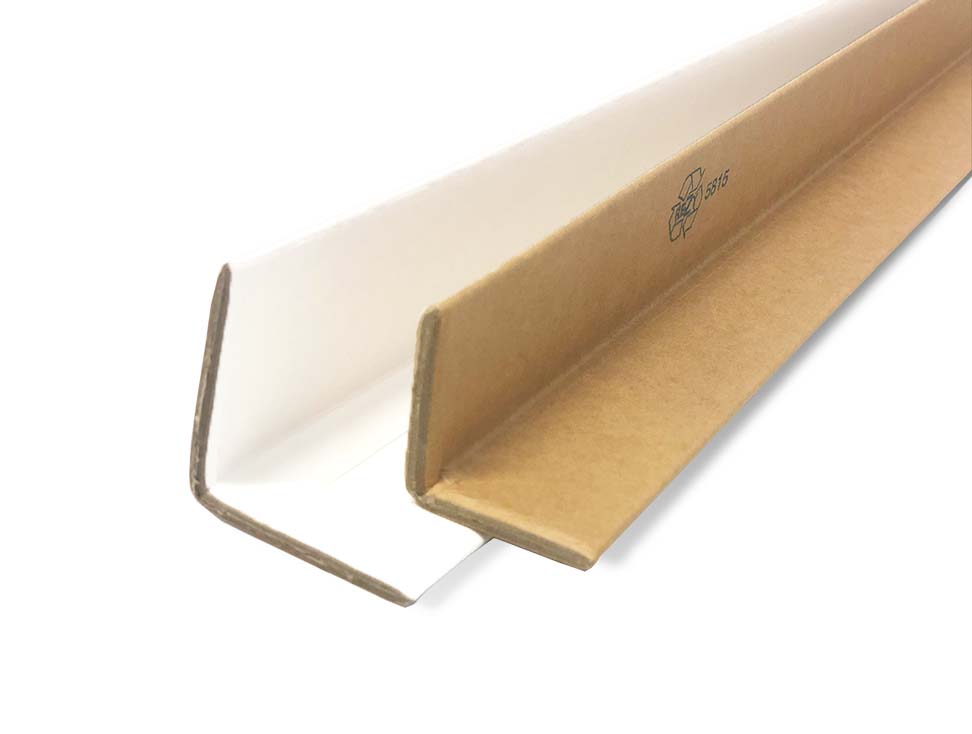
Thickness and ply count drive bending stiffness under strap tension. Recycled kraft is common and cost-effective; virgin kraft may improve appearance and consistency for visible retail-adjacent packs. White or printable outer plies are available when branding or labeling matters. Moisture-resistant constructions or wax/coating options exist for wet lanes—define the performance you need rather than accepting “waterproof” as a brochure word.
Adhesive and delamination risk
Edge boards fail when laminated plies separate under humidity or when strap tension peels the profile open. Ask how layers are bonded, request humidity handling guidance, and reject boards that open at the spine in a simple bend-and-pull check. Adhesive quality is part of the spec, not a supplier internal detail.
Applications by industry
Steel coil and metal sheet edge protection; furniture and flat-panel export; appliance carton corners under PET/PP strapping; glass and stone slab shipping; pallet unitizing of corrugated loads; paper-roll and board-bundle protection. Match leg width and thickness to strap type (steel vs plastic) and tension used in your plant or 3PL—not to a generic catalog photo.
How to trial before bulk
Sample at the exact leg width, thickness, and cut length you will buy. Apply production strap tension on a filled pallet; check corner crush, board cracking, and whether straps bite through. Cycle humidity if ocean freight is planned. Confirm length tolerance so vertical boards meet pallet height without gaps that invite strap migration.
Sourcing from China — what to ask
Production method and max length; standard vs custom dies; kraft grade and recycled content documentation if claimed; MOQ by cross-section; lead time; export packing (bundles that do not ovalize in transit); printing/marking options; references in your industry. Prefer suppliers who ask about strap tension and load weight before quoting only per-meter price.
RFQ field list
Profile (L/U); leg widths (e.g., 35 / 50 / 70 mm); thickness or ply; length and tolerance; paper grade; color/print; quantity; destination climate; strap type; whether boards ship nested/bundled; inspection AQL or checklist; substitution rules.
Common buyer mistakes
Ordering the cheapest thin 35 mm board for heavy industrial straps; mixing leg widths across a program without updating pack instructions; approving a dry sample then storing boards in damp warehouses; treating edge boards as optional “extras” after carton specs are frozen—corner damage often appears only after the first export peak season.
Related PackTrades Knowledge
Buyer Checklist
Related Products
Supplier SKUs on PackTrades that match this topic—open a product, then submit an RFQ.
Continue on PackTrades
Open the matching product categories, solutions, and RFQ path for this topic.