Technical Articles
Water-Based vs UV Coatings for Packaging Print
Buyer guide to selecting water-based and UV coatings for packaging print: gloss, rub resistance, curing, food-contact considerations, production fit, samples, and RFQ controls.
Quick answer
Choose water-based coating for economical, broadly recyclable paperboard work with moderate protection; choose UV when high gloss, fast cure, or stronger rub resistance justifies the process and compliance controls. Quote the coating against your board, ink set, and converting sequence—not as a finish name alone.
Where each system fits
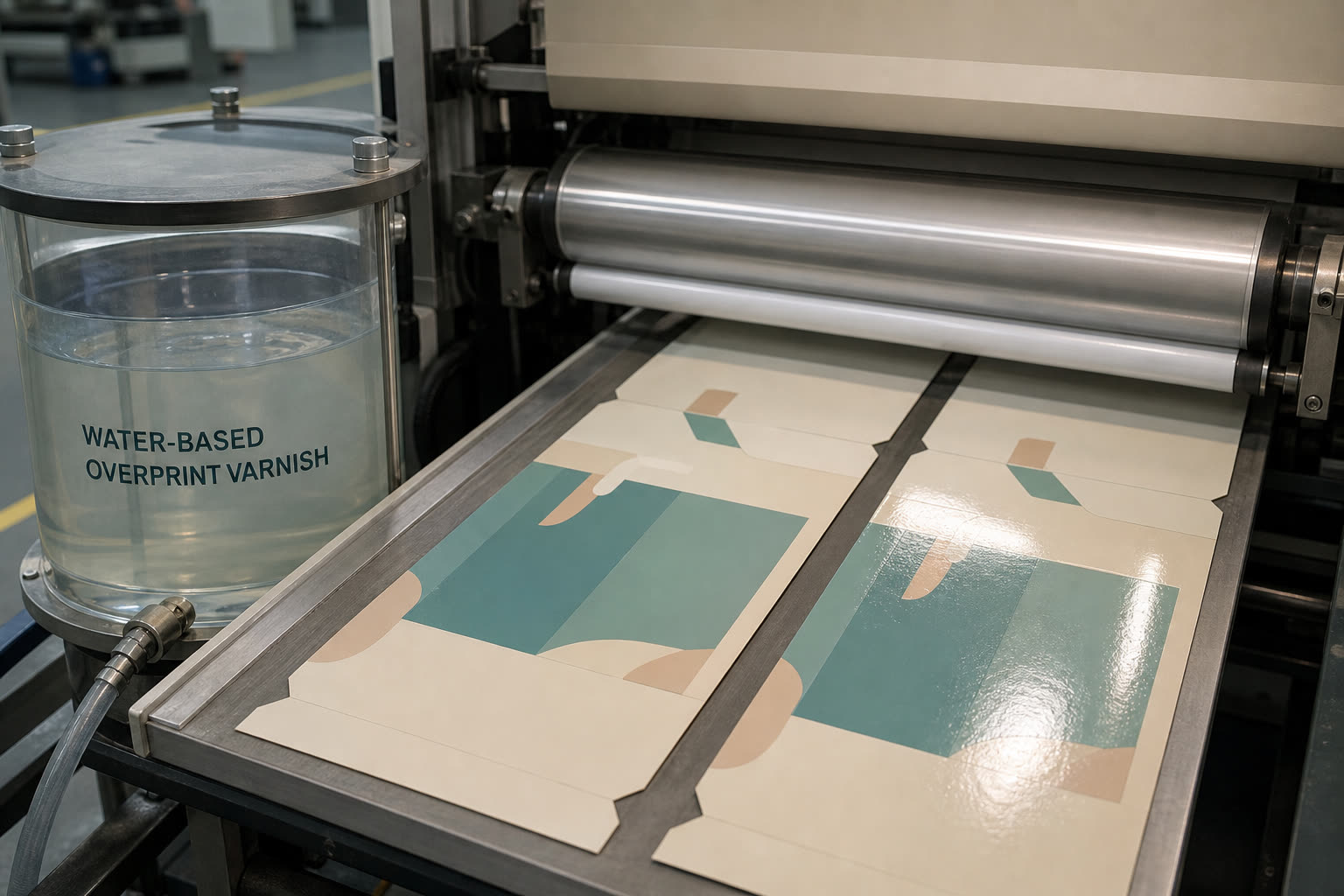
Water-based aqueous coatings suit many folding cartons, corrugated displays, and paper bags. UV coatings suit premium cartons, covers, and demanding graphic surfaces where instant cure and visual pop matter. Neither automatically guarantees food-contact suitability, low odor, or scuff-proof performance.
Performance decisions
Define gloss or matte target, coefficient of friction if cartons run on equipment, rub/scuff resistance, blocking risk, and fold-crack tolerance. UV can give a harder surface, but brittle film on deep scores can crack. Water-based coating may need more drying capacity and can be less resistant to severe abrasion.
Production compatibility
State offset, flexo, or digital print process; ink chemistry; coat weight; dryer or UV lamp configuration; and downstream foil, glue, or lamination steps. UV shadowing and incomplete cure around dense graphics require validation. Water-based systems need a realistic drying window before stacking.
Compliance and sustainability
Request TDS/SDS and declarations appropriate to the destination and end use. For food-adjacent packaging, assess the complete printed construction and curing controls, not only the coating supplier statement. Do not call a coated board recyclable without checking the local stream and coating weight.
Sampling gates
Approve drawdowns on production board, then printed production samples after scoring and folding. Run rub, tape, odor, blocking, and glue/foil adhesion tests that match actual use. Retain the approved sample and record coating lot and cure settings.
RFQ fields
Board grade and print process/ink system
Gloss or matte target; coat weight range
Rub, blocking, fold, and odor requirements
UV equipment or drying capacity; downstream converting
Food-contact/compliance needs; sample and volume
Related PackTrades Knowledge
Buyer Checklist
Related Products
Supplier SKUs on PackTrades that match this topic—open a product, then submit an RFQ.
Continue on PackTrades
Open the matching product categories, solutions, and RFQ path for this topic.