Buying Guide
How to Spec Twist-off Caps for Export Jars
Specify export twist-off caps by jar finish, lug count, metal, and compound—not diameter alone. RFQ China cap plants with the jar drawing and fill process.
Quick answer
Specify a twist-off cap from the jar finish drawing, lug count, metal, internal lacquer, and sealing compound. A nominal diameter plus a print file is not a specification. Cold fill, hot fill, and retort do not share one gasket.
What has to be frozen before artwork?
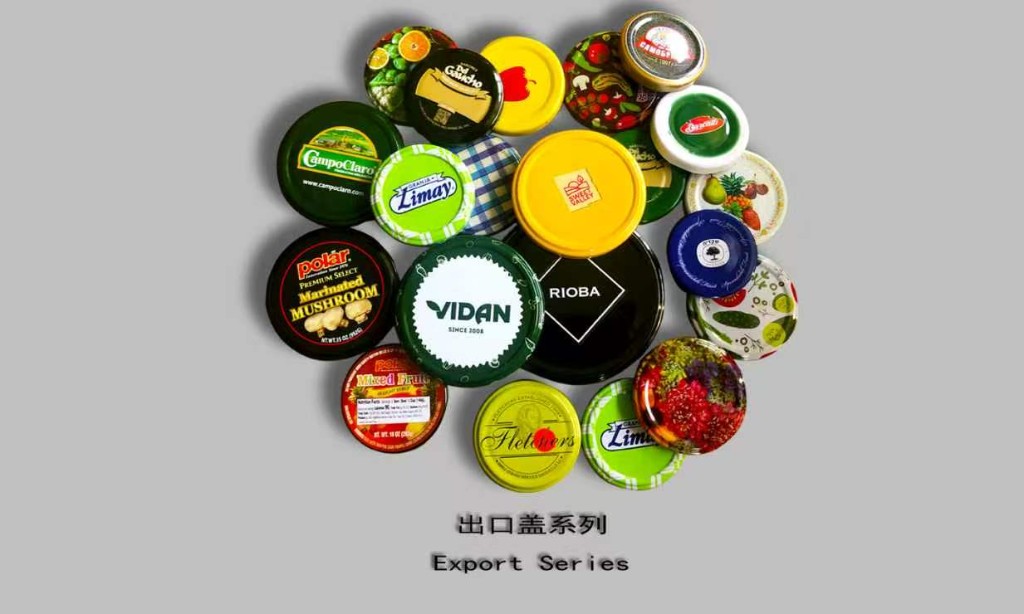
Lock the glass or metal finish, the diameter that finish uses, the lug count, tinplate or tin-free steel, the lacquer system, and the compound grade tied to the real process. Print, a vacuum-button panel, a high skirt, or a knurled anti-slip skirt come after the seal is defined. On PackTrades, Linyi Yinuo Metal Caps lists export print, e-commerce fruit, high-temperature compound, fruit and rice wine, beverage and health, high-skirt, and anti-slip series. Gallery photos are print references, not fixed SKUs, and a stated daily output is not a promise on your order.
Which finish details are easy to get wrong?
Commercial twist-off finish names buyers commonly have to choose among include 38, 43, 48, 53, 58, 63, 66, 70, and 82 mm. Those names are finish designations, not a ruler measurement of the skirt. Four-lug and six-lug versions can share a similar diameter, so copy the lug count from the jar drawing or from finish samples. Send the drawing, or at least three production finishes, with the RFQ.
How do fill processes change the cap?
Write the process as a temperature and a time, not as the word “food cap.” Cold fill stays well below a hot fill. Hot fill is often written around 80–95°C. Retort or sterilization is often written around 116–121°C for a stated number of minutes. Those bands are the process you must declare. They are not a rated temperature for any PackTrades cap until the plant confirms the compound grade in writing. Acid, oil, salt, and sugar also change the lacquer. Protein fills may need a sulfur-resistant internal coating so the metal does not darken.
What should the RFQ list?
Treat every line below as a frozen field. A quote that leaves one of them as “standard” cannot be compared with another plant.
Jar finish drawing or finish samples; diameter name; lug count
Tinplate or tin-free steel; thickness if the line already has a capper setting
Internal lacquer and external coating; plain, white, or litho print
Compound grade; cold fill, hot fill, or retort, with temperature and time
Vacuum button, high skirt, or anti-slip knurl only if the pack needs them
Monthly volume; packing for ocean humidity; ban on metal, lacquer, or compound swaps
When should you reject a quote?
Reject a quote that matches only the millimeter size, prices print from a paper proof, or swaps metal or compound without a seal test on your jar. Also reject a single unit price that mixes a cold-fill gasket and a retort gasket.
Related PackTrades Knowledge
Buyer Checklist
Related Products
Supplier SKUs on PackTrades that match this topic—open a product, then submit an RFQ.
Continue on PackTrades
Open the matching product categories, solutions, and RFQ path for this topic.