Buying Guide
How to Choose Corrugated Board Glue from China
A practical sourcing framework for corrugated board glue from China: viscosity and gel temperature, powder vs liquid, line-speed fit, trial design, and supplier technical-support tests.
Quick answer
A practical sourcing framework for corrugated board glue from China: viscosity and gel temperature, powder vs liquid, line-speed fit, trial design, and supplier technical-support tests.
Price per ton is the wrong first question
Corrugated board glue exists to create pin bonds at your line speed without wrecking ECT, flatness, or converting yield. Buyers who start with USD/ton often end with delamination, warp, and “mystery waste” that dwarfs the adhesive line item. This guide shows how to choose glue from Chinese suppliers using process fit, measurable specs, and a trial protocol you can defend internally.
Clarify your bonding duty cycle
Document wall type and flute, liner/medium grades (or recycled %), design speed vs typical running speed, single-facer and double-backer heat sources, climate (especially monsoon humidity), and current failure modes if any. Send this sheet with every RFQ so quotes are for the same duty—not generic “corrugated glue.”
Core technical parameters to demand
Viscosity method and operating band (Stein-Hall or stated cup); solids content; gel / gelatinization temperature window; pH; recommended water temperature for mixing; pot life; storage life for powder or liquid; suggested glue film / consumption guidance; compatibility notes for alkali-free or low-temperature lines if relevant.
Match gel temperature to the real web
If glue gels too late for your heat profile, bonds stay weak; if it gels too early, you get starvation and machine mess. Ask suppliers to relate gel temperature to your steam or low-temperature process—not to a textbook mill. For boiler-free or low-temperature programs, require trial data at comparable web temperatures.
Powder vs liquid for export buyers
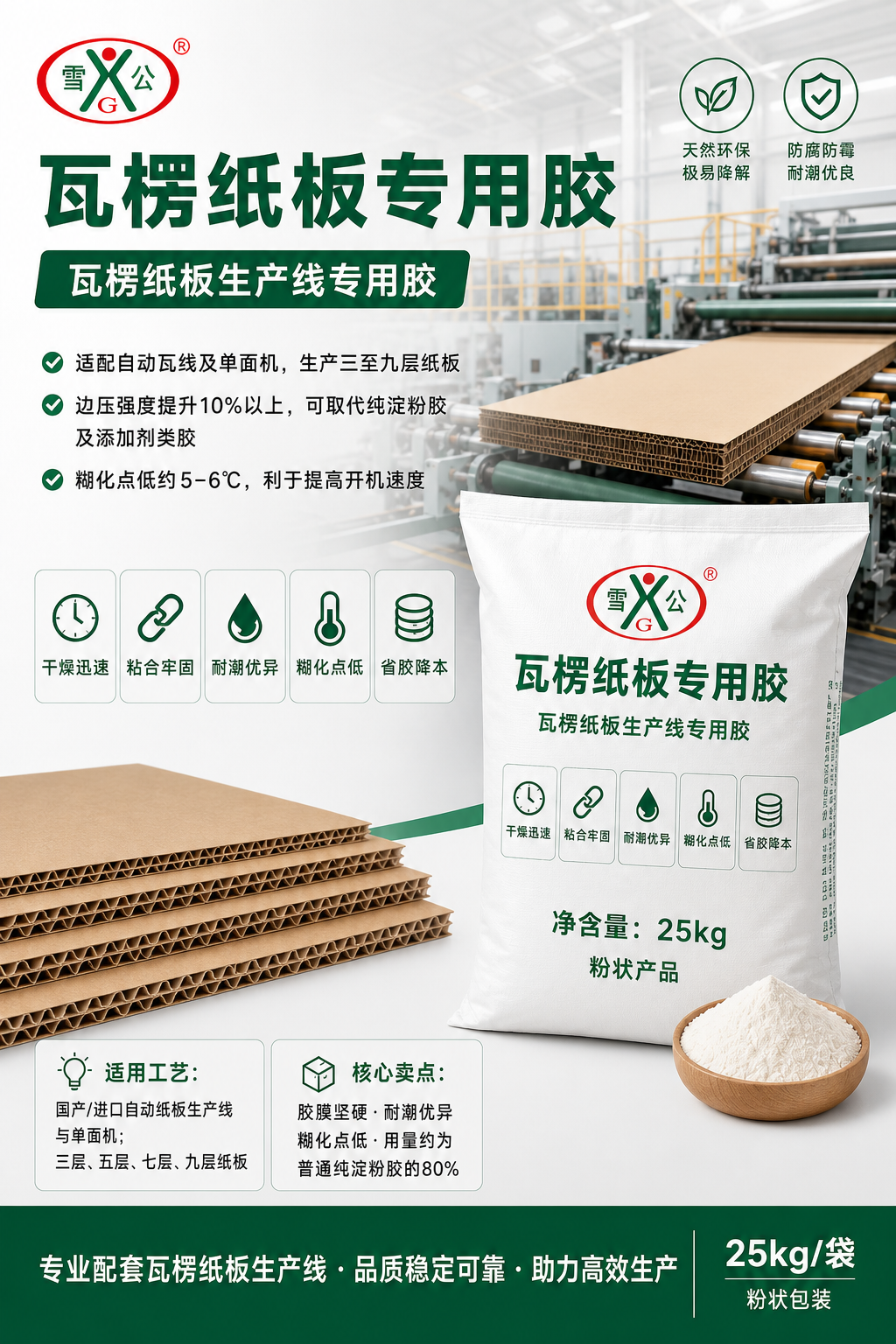
Powder typically travels better and stores longer; liquid can reduce on-site preparation if the plant already runs stable liquid logistics. For first imports, powder plus a clear mixing SOP is often safer. Confirm whether the supplier trains remote mixing and what water-quality constraints apply.
Starch vs modified / specialty systems
Standard starch systems cover many single-wall programs. High speed, heavy recycled papers, or moisture-critical export packs may need modified systems. Do not upgrade chemistry until a controlled trial shows standard starch cannot meet bond and waste targets—over-specifying specialty glue raises cost without fixing heat or paper moisture problems.
Alkali-free options—when they belong on the shortlist
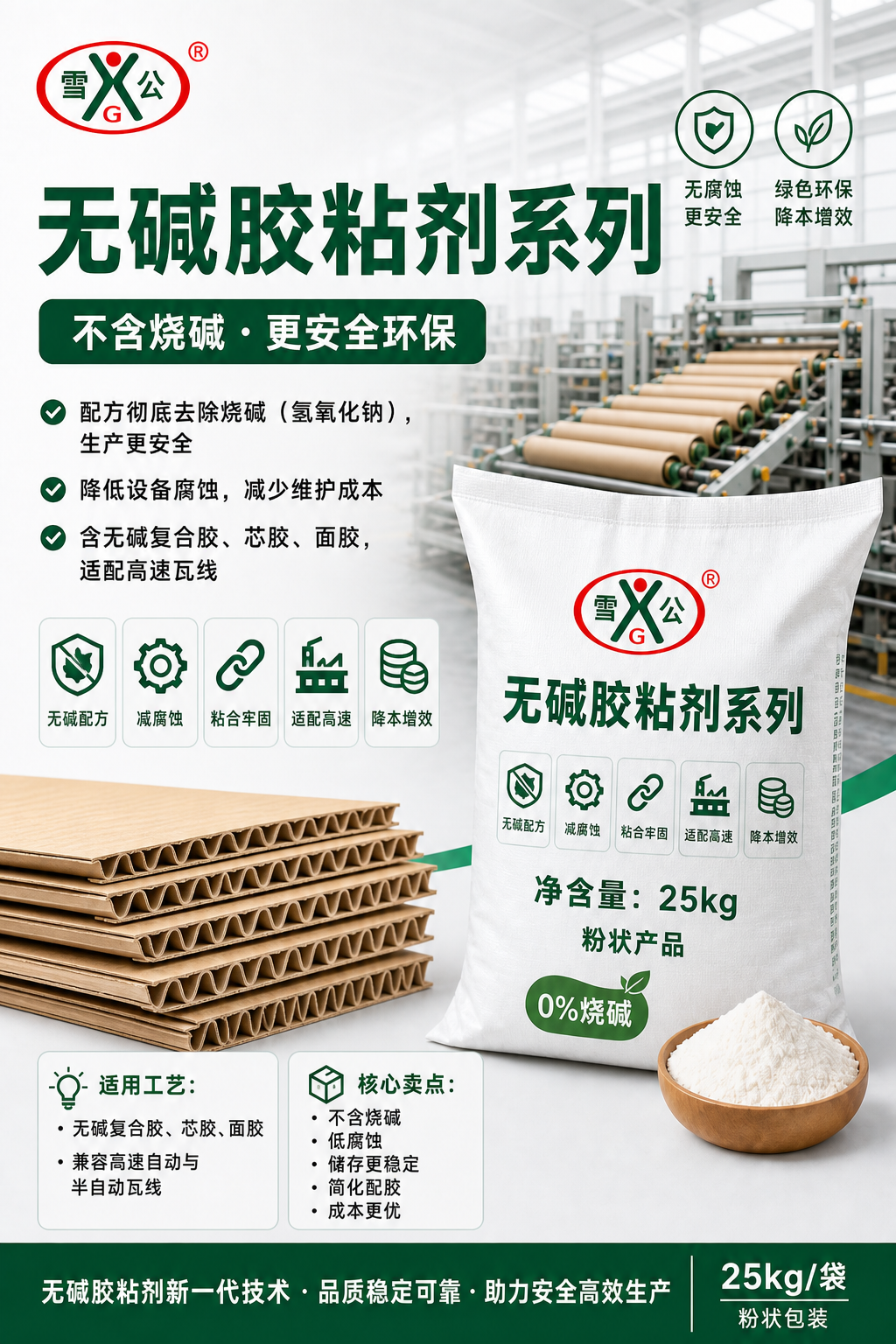
Shortlist alkali-free when corrosion, operator safety, or cleaner-plant policies matter, or when the supplier demonstrates equal bonding on your papers. Verify with pH data and line references. See the dedicated alkali-free Knowledge article for deeper criteria.
Supplier technical-support test (use before annual volume)
Can they explain viscosity correction without only saying “add water”? Do they provide a TDS with the fields above? Will they join a video call during trial week? Do they ask for paper grades before quoting? A vendor that only emails a price list is not a corrugating adhesive partner.
Trial protocol that produces a decision
1) Freeze paper lots and machine baseline. 2) Run incumbent glue for a reference shift if possible. 3) Run candidate glue across full shifts. 4) Log viscosity, board moisture, waste, delamination, ECT on trial board. 5) Convert a sample into cartons and check folding/gluing. 6) Decide on total cost and risk, not feel.
Commercial terms that protect you
MOQ and packaging form; lead time; COA per lot; sample cost policy; claim process for bonding failures tied to agreed trial conditions; Incoterms and drum/bag packaging for export. Avoid open-ended “quality guaranteed” language without measurable acceptance criteria.
Common mistakes
Comparing only price; changing paper and glue in the same week; accepting TDS without viscosity method; skipping humidity season trials; blaming glue for preheater or paper moisture faults; ordering annual volume from a one-hour demo.
Next steps on PackTrades
Shortlist adhesive manufacturers, attach this RFQ field list, and cross-read Why Corrugating Line Glue Viscosity Fluctuates, Why Corrugated Board Delamination Happens, and Corrugated Board ECT and FCT Explained before locking the PO.
Buyer Checklist
Related Products
Supplier SKUs on PackTrades that match this topic—open a product, then submit an RFQ.
Continue on PackTrades
Open the matching product categories, solutions, and RFQ path for this topic.