Technical Articles
What Is Alkali-Free Adhesive?
What alkali-free packaging adhesive means in practice: how it differs from caustic-based starch systems, where it helps, what to verify on TDS and trials, and how buyers should qualify it for corrugating lines.
Quick answer
What alkali-free packaging adhesive means in practice: how it differs from caustic-based starch systems, where it helps, what to verify on TDS and trials, and how buyers should qualify it for corrugating lines.
Definition buyers can put on a PO
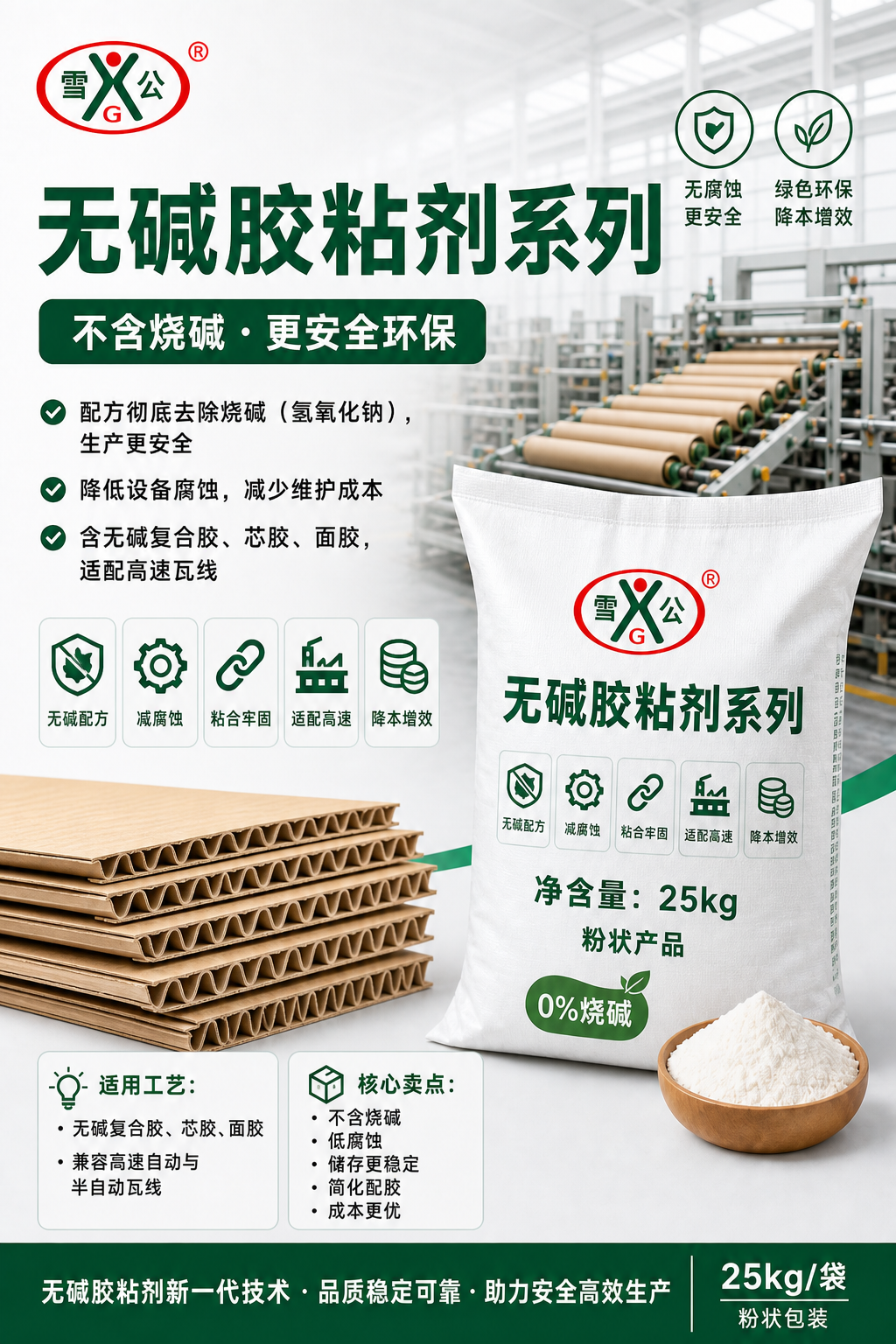
Alkali-free adhesive, in packaging practice, usually means a starch or starch-hybrid corrugating/paper adhesive formulated without caustic soda (sodium hydroxide) as the alkalizing agent. The intent is to reach usable gelatinization and viscosity behavior with a safer, less corrosive chemical path. “Alkali-free” is not a synonym for “no chemistry” and not an automatic sustainability certificate—treat it as a process claim you verify with TDS, pH data, and line trials.
Why traditional starch systems use alkali
Classic Stein-Hall-type processes often use caustic to help gelatinize starch and tune viscosity. That approach works at scale but brings handling hazards, equipment corrosion, and tighter EHS controls. Plants with aging glue kitchens or strict safety programs are the first to ask for alkali-free alternatives.
Practical benefits—when they are real
Reduced caustic handling risk; lower corrosion pressure on tanks, pipes, and rolls; simpler operator training in some plants; alignment with cleaner-production narratives for brand audits. Benefits only count if bonding, speed, and waste match or beat the incumbent under your papers and climate.
What alkali-free does not automatically fix
It will not fix wrong paper moisture, drifting viscosity discipline, or underspecified ECT. It will not make recycled medium behave like virgin furnish. If delamination is caused by heat/moisture imbalance, changing to alkali-free without process control is a false fix.
TDS fields to require
Statement that formulation is without caustic soda; pH range of prepared glue; viscosity method and band; gel-temperature guidance; solids; mixing procedure; pot life; shelf life; recommended paper/speed window; any known limits (e.g., extreme recycled grades). Reject TDS that only says “eco-friendly.”
Qualification path
Lab or small-batch mix check → single-shift trial at production speed → multi-shift trial across humidity variation if you export seasonally → ECT and converting checks → EHS review of SDS vs incumbent. Keep paper lots constant. Record operator feedback on preparation difficulty—adoption fails when kitchens refuse the new mix routine.
Applications beyond the marketing slide
Most buyer interest sits on corrugating laminating/flute/liner bonds. Some suppliers also position alkali-free grades for related paper packaging steps. Always match the SKU to the application—do not assume one alkali-free drum covers tube winding and corrugating.
Commercial and audit notes for China sourcing
Ask for reference lines (region, speed, board types). Request remote support during first production week. For brand questionnaires, keep claims limited to what SDS/TDS support. Compare total cost including training and possible recipe learning curve.
Related reading
Pair with How to Choose Corrugated Board Glue from China, Why Corrugating Line Glue Viscosity Fluctuates, and Factory Audit Checklist for Adhesive Buyers. Review alkali-free product listings on PackTrades only after your RFQ fields are filled.
Buyer Checklist
Related Products
Supplier SKUs on PackTrades that match this topic—open a product, then submit an RFQ.
Continue on PackTrades
Open the matching product categories, solutions, and RFQ path for this topic.