Buying Guide
Complete Guide to Packaging Adhesives
Packaging adhesives buyer's guide: match adhesive for packaging to your corrugating, laminating, honeycomb, or paper-tube lines. Specs, trials, and RFQ fields for China sourcing.
Quick answer
Packaging adhesives buyer's guide: match adhesive for packaging to your corrugating, laminating, honeycomb, or paper-tube lines. Specs, trials, and RFQ fields for China sourcing.
Why packaging adhesives are a system choice
Packaging adhesives are not a single commodity. The same factory may need starch systems for a corrugator, water-based resins for paper tubes, laminating adhesives for printed sheets, and specialty grades for honeycomb or edge protection. Sourcing adhesive for packaging without matching substrate, line speed, moisture, and recyclability goals is how plants create delamination, warp, and claim costs that erase any unit-price savings. This guide helps buyers match packaging adhesives to their process, write complete RFQ specs, and trial correctly when sourcing from China.
Map adhesives to the process, not the brochure name
Start from the converting step: corrugating (single facer / double backer), paper-tube winding, honeycomb core/facing, sheet-to-board lamination, carton sealing, or protective packaging assembly. Then list substrate (kraft liner, recycled medium, coated board, kraft for tubes), target speed, climate, and whether the finished pack must remain easily recyclable. Only after that shortlist adhesive chemistry families.
Starch-based corrugating adhesives
Still the workhorse for corrugated board. They bond liner to fluted medium at industrial speeds when viscosity, solids, and gel temperature are controlled. Strengths: cost efficiency, paper-compatible recycling when correctly formulated, mature supply in China. Risks: process sensitivity (mixing, temperature, paper moisture), seasonal drift, and operator shortcuts. Buyers should treat starch glue as a process chemical with TDS + shift logs, not as a warehouse SKU.
Alkali-free and modified starch systems
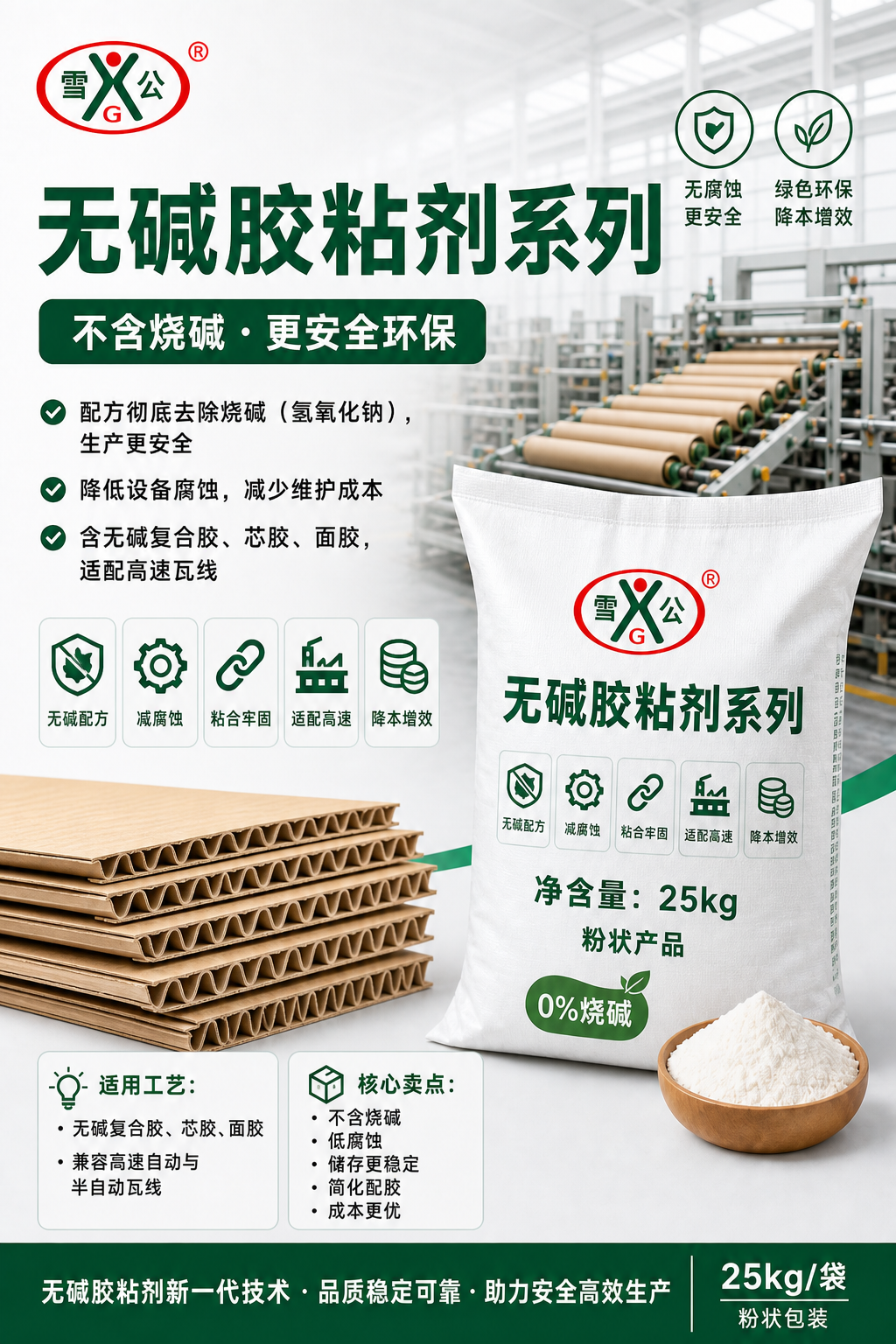
Alkali-free grades remove caustic soda from the formulation path, aiming at safer handling, lower corrosion on equipment, and cleaner plant practice. They are not automatically “better bonding” for every mill—qualify against your paper grades and speed. Ask for pH windows, gel-temperature behavior, and documented line references at similar meters/minute.
Water-based synthetic / resin adhesives for paper converting
Common in paper tubes, corner protectors, some laminations, and specialty paper bonds where starch alone is not enough. Evaluate wet tack, open time, dried film flexibility, and whether formaldehyde or other restricted substances are present if your brand or market requires it. Request SDS/TDS and any food-contact or low-VOC statements only when documented—not as marketing adjectives.
Lamination adhesives for printed packaging
Used when printed sheets, liners, films, or paper layers must bond with consistent surface quality. Failure modes include bubbles, orange peel, edge lift, and warp after die-cutting. Specify substrate stack, coat weight guidance, drying conditions, and press/laminator type. Sample approvals should include converting steps after lamination, not only peel feel on day one.
Honeycomb and protective-structure adhesives
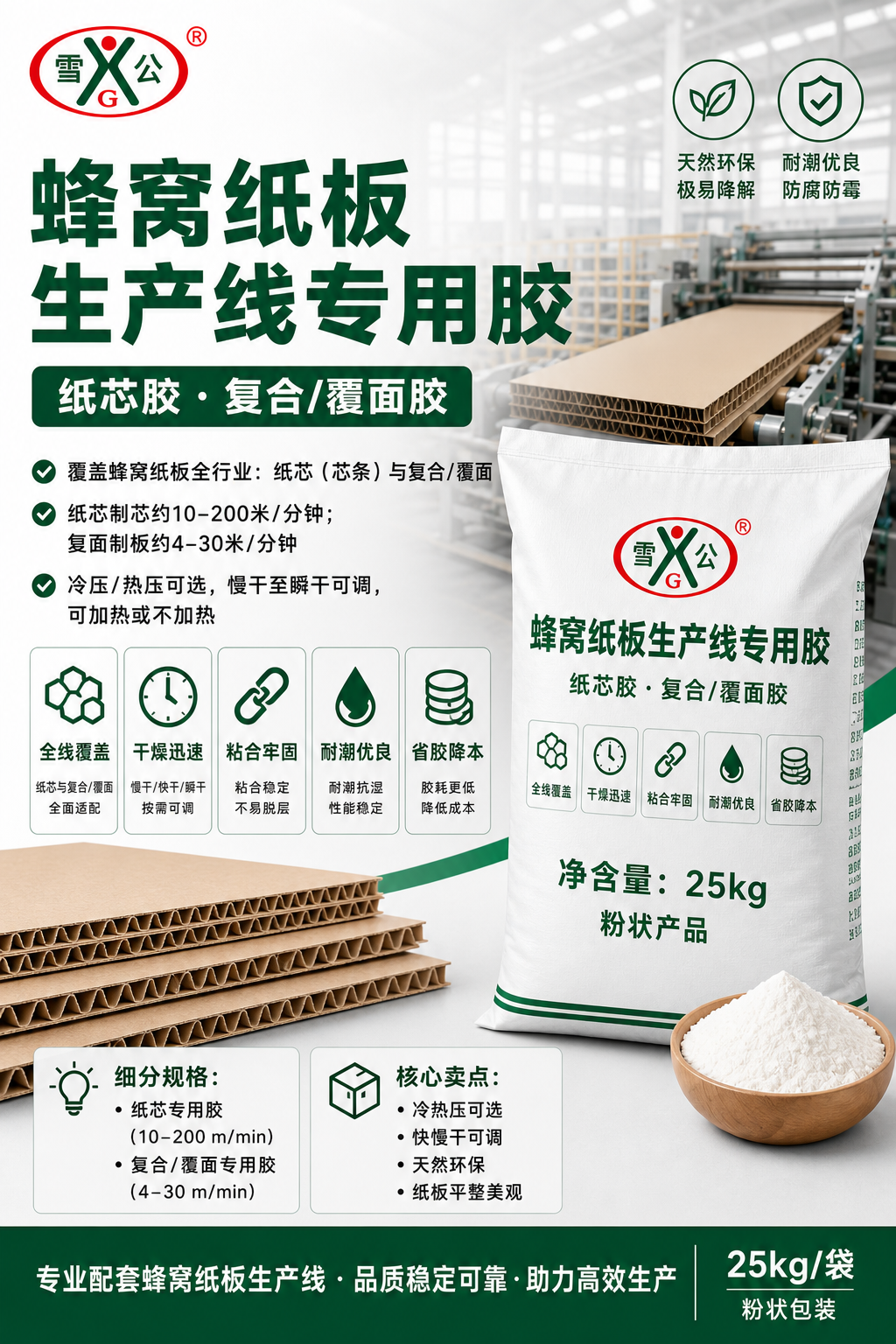
Honeycomb core bonding and facing need stable viscosity, strong wet tack, and drying behavior suited to continuous cell production. Do not accept “general paper glue” for honeycomb lines without application data. Ask for compression outcomes on the actual cell size/thickness you buy.
Specification fields every adhesive RFQ should include
Application and machine type; paper/board grades; target line speed; viscosity method and target band; solids %; pH; gel temperature (if starch); pot life after mix; shelf life in original pack; packaging form (powder/liquid); climate of use; known defects to solve; sample size and trial success criteria (bond, waste %, ECT or peel); documentation required (TDS, SDS, COA).
Powder vs liquid supply forms
Powder often wins on freight, storage life, and export logistics; liquid can win on ready-to-use convenience if local mixing capability is weak. Compare landed cost per bonded square meter, not drum price. Confirm mixing equipment, water quality expectations, and operator training before choosing powder for a plant that has never run it.
How to trial without fooling yourself
Run trials on production paper at production speed for multiple shifts if possible. Measure bond, waste, warp, and downstream converting—not only a lab peel. Keep paper lot and machine settings constant when comparing two adhesives. Record viscosity and board moisture. A one-hour demo that “looks bonded” is not qualification.
Cost model that buyers should use
Unit price × consumption + waste uplift + claim risk + technical support availability. A slightly higher-priced adhesive that cuts delamination claims and glue consumption usually wins on total cost. Ask suppliers for typical consumption ranges on your board construction.
China sourcing realities
Capable adhesive makers can support export with TDS, samples, and remote troubleshooting; weak vendors quote only price and disappear when viscosity drifts. Prefer suppliers who ask about your line before quoting. Use PackTrades manufacturer and product pages to shortlist, then force comparable RFQs using the fields above.
Related Knowledge on PackTrades
- Continue with How to Choose Corrugated Board Glue from China
- What Is Alkali-Free Adhesive?
- Why Corrugated Board Delamination Happens
- Why Corrugating Line Glue Viscosity Fluctuates
- Adhesive Shelf Life and Storage Guide
- and Factory Audit Checklist for Adhesive Buyers
Buyer Checklist
Related Products
Supplier SKUs on PackTrades that match this topic—open a product, then submit an RFQ.
Continue on PackTrades
Open the matching product categories, solutions, and RFQ path for this topic.